Conservation and welfare
Welfare first, in everything we do
Every decision in the two gardens starts with one question: is it good for the animal? This page sets out what is in place, what is being built and what we commit to.
In numbers
The collection, counted
Species coming to Giza Zoo, by their global Red List category. Each dot is one species: point at one to see which.
Meet themEgypt's own wildlife among them runs from the Egyptian tortoise to the Nile monitor. The bars show each group.
From the sacred lotus and the blue lotus of the Nile to the jacaranda, every plant in the two gardens has been counted. Orman Garden is more than a botanical collection: it keeps a herbarium and a working nursery, and distils organic fragrant oils from its own plants.
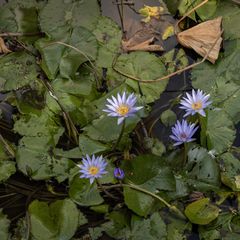
- Lotus ponds
- Herbarium
- Organic fragrant oils
- Working nursery
3 for 1: trees of the same species planted for every dead tree that is removed.
Species, not animals. Red List categories are the global assessments of the IUCN.
The ledger
Where we stand
Welfare is the first test of everything we do. Here is where each part of that work stands.
The welfare of every animal comes before anything else we do. An Animal Welfare Officer is in post, and the Five Domains, with choice added as a sixth, are our framework.
Every animal's welfare assessed against all six domains, individually or by group, and reported every year.
Every animal in the collection has been assessed by our vets, and preventive health monitoring is in place. A quarantine protocol and a receiving committee check every arriving animal. An interim clinic runs until the hospital opens.
A veterinary hospital with diagnostics, quarantine and recovery, and a health record for every animal.
A diet written for each species, prepared daily, with a head of nutrition responsible for it.
Food storage and preparation rebuilt so that every meal meets the needs of the animal it is for.
New habitats and night houses are under construction across the zoo, each one designed around how its animals live and behave.
Every old animal house replaced, in phases, with a habitat that gives the animal space, shelter and choice.
Every keeper is trained to put the animal's welfare first, and a keeper training programme is running.
Welfare training for everyone who works near the animals, from keepers to gardeners and guides.
We hold our care to international welfare standards. Membership of the world association of zoos is something we intend to earn.
To become an accredited or full member of the recognised association for our region, then apply to the world association.
Welfare records are kept for every animal from the day it arrives.
A public report on the welfare of our animals, every year.
Welfare
Six domains, one priority
- 1NutritionIn place
A diet written for each species, prepared daily, with a head of nutrition responsible for it.
- 2Physical environmentUnder way
New habitats and night houses replace the old animal houses, with space, shade, water and shelter.
- 3HealthUnder way
Every animal assessed by our vets and monitored preventively. A veterinary hospital is being built.
- 4Behavioural interactionsUnder way
Enrichment in the daily routine, and keepers trained to read and respect natural behaviour.
- 5Mental stateCommitted
How the animal experiences everything else, and what matters most. Our Animal Welfare Officer leads these assessments.
- 6ChoiceUnder way
Every animal can choose where to be: in view or out of it, in sun or in shade, with others or alone. Choice gives it control over its own day.
Six domains, one priority: the welfare of each animal, in every act.
The road
Three phases
 Under wayPhase 1Stabilise
- Veterinary hospital and quarantine
- A health record for every animal
- Keeper training
 CommittedPhase 2Transform
- New habitats delivered, each designed around the animal
- A welfare audit against the six domains, auditor to be named
- Managed breeding of threatened Egyptian species, with partner programmes
- Support for conservation in the field
 CommittedPhase 3Pioneering
- Setting the standard for animal welfare in the region
- Evaluation by the recognised association for our region
- Membership application
- Education at full scale
For professionals
Ask us anything
Curators, registrars, vets and conservation partners: write to the people who do the work. We answer within five working days.